The Snake River Series:

The Snake River Series:

A Lifetime on the Snake

A Lifetime on the Snake

The River Runs Through us

New West Founder Corey Milligan has spent a lifetime on the Snake River, running its rapids as a Class V kayaker and fishing water no drift boat could reach. But his greatest gift was sharing it with his three kids, who grew up floating beneath the Tetons and now paddle whitewater of their own. The Snake River Collection honors that legacy. Each handle reflects the river’s colors, and every blade carries a topographic engraving of a real stretch of the Snake. 

Order Yours

Part Three of Three:

Corey Milligan and the Snake River

There comes a point, even for the most committed adrenaline-seekers, when the river changes on you. Not the river itself — the Snake is still the Snake, cold and swift and indifferent — but what you're looking for in it.

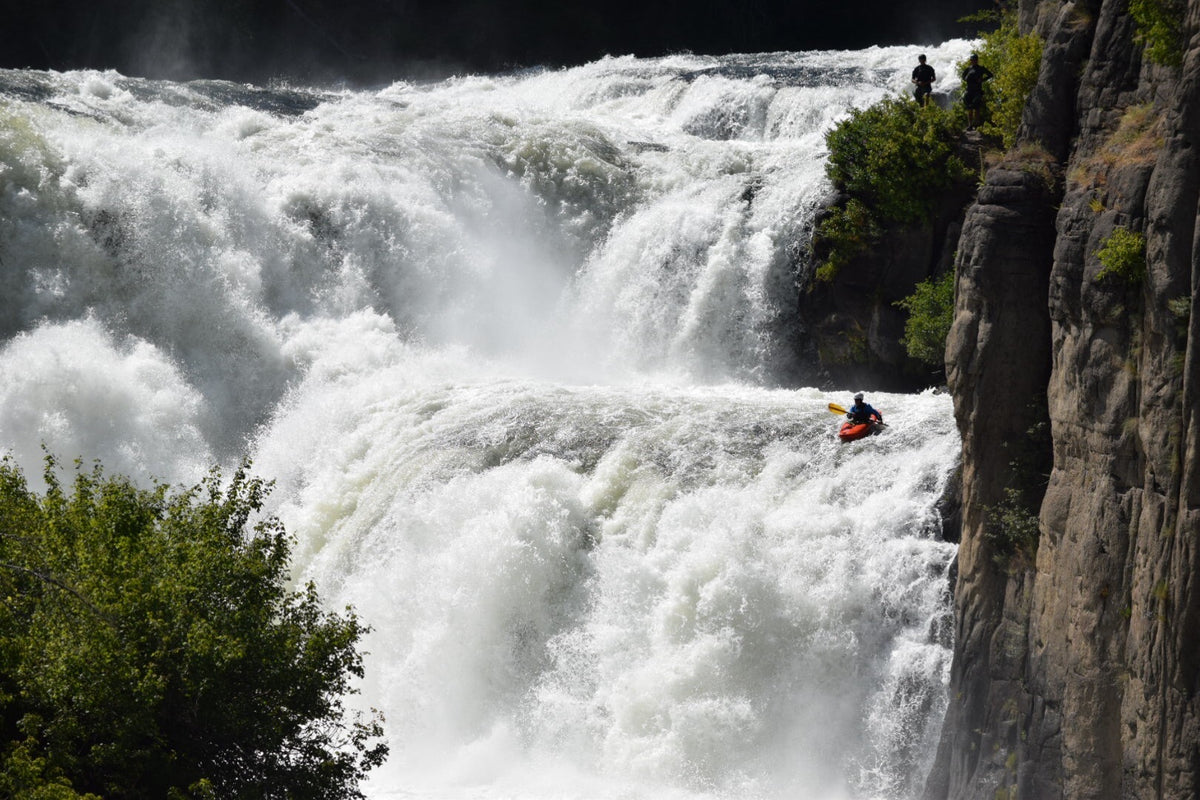
For Corey Milligan, that shift came gradually, in the years after he'd peaked as a Class V kayaker and managed the guides at Mad River Boat Trips for three seasons. He'd run the river in flood. He'd recirculated three times in a hydraulic hole near Twin Falls and come out the other side. He'd done what he set out to do.

"I sort of peaked out on kayaking," he says. "I'd taken it as far as I felt like I needed to, in terms of risk and all those things." 

So he picked up a fishing rod.

Corey is quick to admit that, at first, fishing on the Snake was mostly a pretext.

"I love to fish. But at some level, especially at the start, it was just an excuse to be on the water." He smiles at this. "And honestly, today I would say I mostly love fishing as an excuse to just be out on the water."

What he brought to fishing, though, was everything the river had already taught him. The main stretches of the Snake are heavily trafficked by drift boats — the hardshell vessels that most guides and anglers use. Corey had a different tool: a specialized small raft called a Puma, nimble enough for the kind of swift, skinny water that drift boats can't touch.

"Because of my whitewater experience, I could take the boat into very skinny water, very swift whitewater, and deal with it," he says. "That allowed me to fish what I would call my private waters."

It was the river giving him something new, the way it always had. Just quieter now.


Then stand-up paddleboarding arrived, and Corey was not quite done being reckless.

He first encountered the sport through a local named Terry Whitaker, who had strapped what appeared to be one of the first SUP boards anyone in Jackson had ever seen to the roof of his car and was quietly figuring out how to paddle it down the river.

"He was not much of a boater," Corey says, laughing. "But he was old and tough and brave. I ran up to him immediately."

He borrowed Whitaker's board, then tracked down what he believes was one of the first inflatable stand-up paddleboards ever manufactured. Within a short time, he was running it through whitewater.

"It's more swimming than surfing," he admits. "Every rapid I guided in a raft for years, I've swum through many times on the stand-up paddleboard."

But with decades of river experience and an intimate knowledge of the Snake's depths and hydraulics, it didn't frighten him. It delighted him. He remains puzzled that the sport hasn't caught on more as a river discipline.

"I feel like if a kid started doing that young, they'd be doing things people do on surfboards, people do on skateboards — except on the river. Stay tuned for that."


The kids, as it turns out, are already there.

Corey raised three children in Jackson, and the Snake River was woven into their childhoods from the beginning. Family time on the water meant floating the Snake — scenic sections, whitewater sections, all of it. 

All three kids came up through the Jackson Hole Kayak Club. All three can paddle whitewater. Corey suspects they surpassed his peak when they were in their early teens.

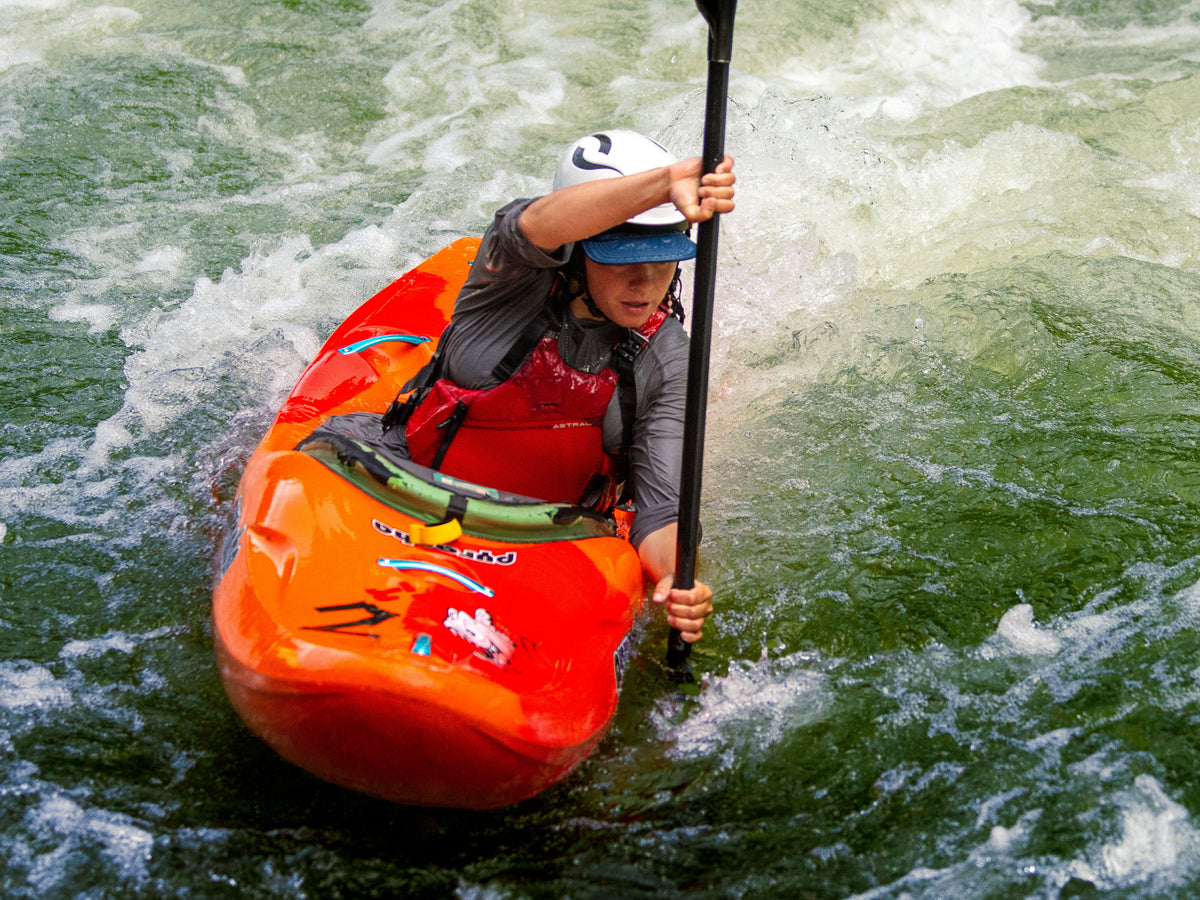
His oldest, Ruby, is a raft guide on the Payette River in Idaho. She regularly runs the North Fork of the Payette — 15 miles of continuous Class V, widely considered the proving grounds for whitewater paddling in the Rocky Mountain West. This year, she's competing in the North Fork Championship, a race that draws the best whitewater paddlers in the world.

"It's like the Pipeline Classic of whitewater," Corey says. "Literally the best in the world."

There were family multi-day trips too — the great runs of the American West, taken as the kids grew old enough to handle them. The Salmon River. The Selway. The Green River. Days on moving water, camped on gravel bars, reading the current.

"Those have truly been some of the richest experiences of my life," he says.


Ask Corey Milligan to explain why a river does what it does to a person — why floating downstream, of all things, can feel like the truest version of yourself — and he gets quiet for a moment.

"I don't know why floating down a river speaks to my soul more than almost anything," he says. "I just love the constantly changing scenery. The ease of being able to move about in current. Just going in the right direction with the right energy."

Jackson Hole is famous for the Tetons, and justifiably so. But Corey believes the best way to experience them is from the water.

"There's really no better way to enjoy the Teton Mountain Range than floating down the Snake River in front of them. You get different angles and different views from every spot. It is truly a magical place in the world."

And close to the New West KnifeWorks factory in Victor, Idaho, the South Fork of the Snake offers something else entirely — one of the legendary fisheries of the Rocky Mountain West, a river that draws serious anglers from across the country to chase cutthroat and brown trout in water as clear and cold as any in the region.

"If you want to catch legendary fish in the Rocky Mountain West, it's definitely one of the spots," Corey says. "It's a fishing mecca."

Watch: R Park's Opening Celebration

The Snake River Collection from New West KnifeWorks is what happens when a lifetime on the water becomes an object you can hold in your hand.

The handle of each knife is built to reflect the colors of the Snake River and the geography that surrounds it — the blue-green of glacial current, the warm ochres of canyon walls, the deep greens of the willows and cottonwoods that line the bank. On the blade, a topographic engraving traces a real section of the river — the same water Corey has paddled in kayaks and rafts and on a stand-up paddleboard, fished from a Puma raft in water no drift boat could reach, floated with his three children on summer days that he'll carry with him the rest of his life.

These knives are made near the river, by people who know it. They are a record of a place — and an inheritance, passed from one generation to the next, the way the river itself has been.

"I raised my three beautiful children to love and appreciate the Snake River," Corey says. "And they do."

So does he. Still. All the more after all of it.